
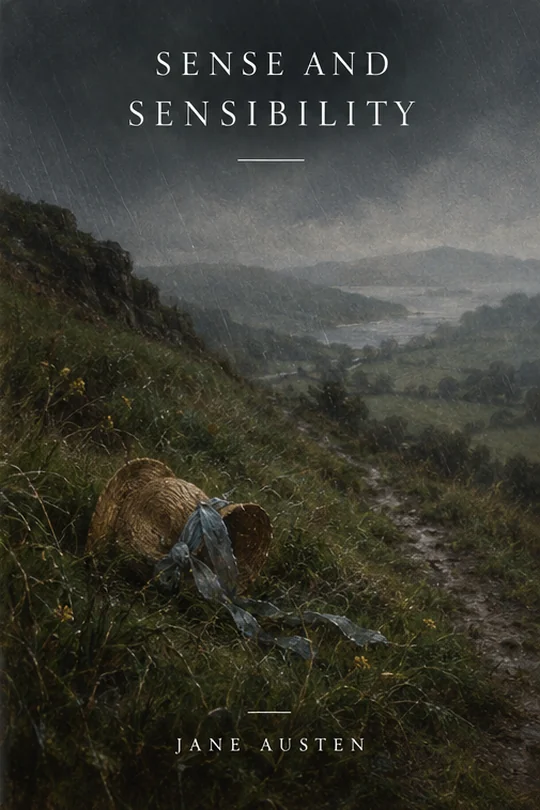
Two sisters confront love, money, and the limits of their own judgment after losing the security of their family home.
- Chapter 1Chapter 1
- Chapter 2Chapter 2
- Chapter 3Chapter 3
- Chapter 4Chapter 4
- Chapter 5Chapter 5
- Chapter 6Chapter 6
- Chapter 7Chapter 7
- Chapter 8Chapter 8
- Chapter 9Chapter 9
- Chapter 10Chapter 10
- Chapter 11Chapter 11
- Chapter 12Chapter 12
- Chapter 13Chapter 13
- Chapter 14Chapter 14
- Chapter 15Chapter 15
- Chapter 16Chapter 16
- Chapter 17Chapter 17
- Chapter 18Chapter 18
- Chapter 19Chapter 19
- Chapter 20Chapter 20
- Chapter 21Chapter 21
- Chapter 22Chapter 22
- Chapter 23Chapter 23
- Chapter 24Chapter 24
- Chapter 25Chapter 25
- Chapter 26Chapter 26
- Chapter 27Chapter 27
- Chapter 28Chapter 28
- Chapter 29Chapter 29
- Chapter 30Chapter 30
- Chapter 31Chapter 31
- Chapter 32Chapter 32
- Chapter 33Chapter 33
- Chapter 34Chapter 34
- Chapter 35Chapter 35
- Chapter 36Chapter 36
- Chapter 37Chapter 37
- Chapter 38Chapter 38
- Chapter 39Chapter 39
- Chapter 40Chapter 40
- Chapter 41Chapter 41
- Chapter 42Chapter 42
- Chapter 43Chapter 43
- Chapter 44Chapter 44
- Chapter 45Chapter 45
- Chapter 46Chapter 46
- Chapter 47Chapter 47
- Chapter 48Chapter 48
- Chapter 49Chapter 49
- Chapter 50Chapter 50
Chapter 1
The family of Dashwood had long been settled in Sussex. Their estate was large, and their residence was at Norland Park, in the centre of their property, where, for many generations, they had lived in so respectable a manner as to engage the general good opinion of their surrounding acquaintance. The late owner of this estate was a single man, who lived to a very advanced age, and who for many years of his life, had a constant companion and housekeeper in his sister. But her death, which happened ten years before his own, produced a great alteration in his home; for to supply her loss, he invited and received into his house the family of his nephew Mr. Henry Dashwood, the legal inheritor of the Norland estate, and the person to whom he intended to bequeath it. In the society of his nephew and niece, and their children, the old Gentleman’s days were comfortably spent. His attachment to them all increased. The constant attention of Mr. and Mrs. Henry Dashwood to his wishes, which proceeded not merely from interest, but from goodness of heart, gave him every degree of solid comfort which his age could receive; and the cheerfulness of the children added a relish to his existence.
By a former marriage, Mr. Henry Dashwood had one son: by his present lady, three daughters. The son, a steady respectable young man, was amply provided for by the fortune of his mother, which had been large, and half of which devolved on him on his coming of age. By his own marriage, likewise, which happened soon afterwards, he added to his wealth. To him therefore the succession to the Norland estate was not so really important as to his sisters; for their fortune, independent of what might arise to them from their father’s inheriting that property, could be but small. Their mother had nothing, and their father only seven thousand pounds in his own disposal; for the remaining moiety of his first wife’s fortune was also secured to her child, and he had only a life-interest in it.
The old gentleman died: his will was read, and like almost every other will, gave as much disappointment as pleasure. He was neither so unjust, nor so ungrateful, as to leave his estate from his nephew;—but he left it to him on such terms as destroyed half the value of the bequest. Mr. Dashwood had wished for it more for the sake of his wife and daughters than for himself or his son;—but to his son, and his son’s son, a child of four years old, it was secured, in such a way, as to leave to himself no power of providing for those who were most dear to him, and who most needed a provision by any charge on the estate, or by any sale of its valuable woods. The whole was tied up for the benefit of this child, who, in occasional visits with his father and mother at Norland, had so far gained on the affections of his uncle, by such attractions as are by no means unusual in children of two or three years old; an imperfect articulation, an earnest desire of having his own way, many cunning tricks, and a great deal of noise, as to outweigh all the value of all the attention which, for years, he had received from his niece and her daughters. He meant not to be unkind, however, and, as a mark of his affection for the three girls, he left them a thousand pounds a-piece.
Mr. Dashwood’s disappointment was, at first, severe; but his temper was cheerful and sanguine; and he might reasonably hope to live many years, and by living economically, lay by a considerable sum from the produce of an estate already large, and capable of almost immediate improvement. But the fortune, which had been so tardy in coming,...